


Cardiovascular disease remains the leading cause of preventable death, particularly among women. The good news is that early screening and thoughtful lifestyle strategies can dramatically alter long‑term outcomes.
In our naturopathic care practice here at Natural Health Clinic, cardiovascular prevention is never one‑size‑fits‑all. It’s a conversation shaped by your unique biology, family history, daily habits, environment, and lived experiences.
Integrative primary care blends the rigor of modern science with a holistic lens—creating prevention strategies that are both evidence‑based and deeply personal.
The Foundations of Heart‑Health Screening
We always start with four essential tests to set a baseline. These core screenings help us understand your current physiology and cardiovascular risk so we can create the right treatment plan for you and measure improvement over time.
Test 1: Blood Pressure
Blood pressure is one of the strongest predictors of long-term heart health. Accurate and regular measurement, both in clinic and at home, is essential since hypertension often has no symptoms but can have a devastating effect on the heart.
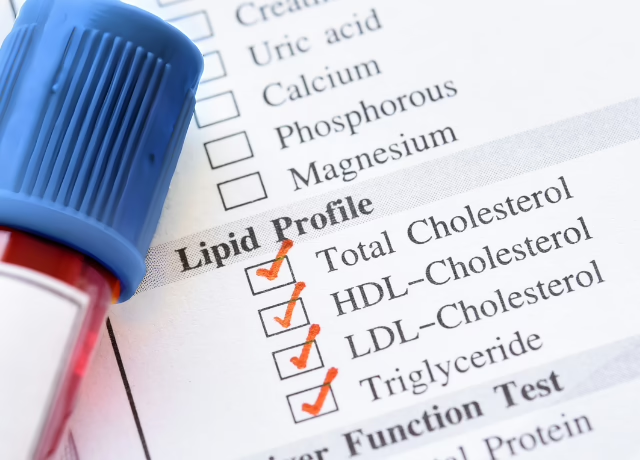
Test 2: Standard Lipid Panel
A cholesterol panel remains foundational to evaluating heart disease risk. For this test, the patient must fast for 12 hours prior to providing blood to get the most accurate reading.
Even in 2026, many people don’t know their cholesterol numbers for both LDL and HDL (aka the good cholesterol), but these values offer major insights into a person’s metabolic health.
Test 3: Blood Sugar
Glucose, Insulin and A1c testing help detect early insulin resistance and prediabetes, which are two conditions that significantly accelerate cardiovascular aging. Early detection allows us to intervene before symptoms ever appear.
Test 4: Lifestyle Assessment
We ask patients in-depth questions about their nutrition, physical activity, sleep quality, stress load, tobacco exposure, and social determinants of health (like food access or financial strain) to get a more comprehensive picture of their overall lifestyle.
We look at these factors together to design realistic, sustainable strategies that fit your life.

4 Advanced Cardiovascular Risk Markers
These tests add depth and precision when the basics don’t tell the full story.
Apolipoprotein B (apoB)
ApoB measures the number of atherogenic lipoprotein particles, the ones capable of entering the arterial wall and forming plaque that can lead to blockages in the arteries.
It often predicts cardiovascular risk more accurately than LDL cholesterol (the bad cholesterol) alone, especially when triglycerides are elevated or when LDL results are different from prior testing or family history.
High‑Sensitivity C‑Reactive Protein (hs‑CRP)
This protein reflects inflammation throughout the body, including the arteries.
Chronic, low‑grade inflammation is a major contributor to plaque buildup in the arteries. Having elevated levels of hs‑CRP can signal increased cardiovascular risk even when cholesterol is normal.
Testing Tip: This should not be tested when you’re sick, injured, or recovering from an infection. If levels are above 10 mg/L, we recheck once inflammation calms down.

Lipoprotein(a) — Lp(a)
This is genetically determined and remains stable throughout your life. A single test can reveal whether inherited cardiovascular risk factors are at play. Elevated levels can increase the likelihood of early heart disease or aortic valve issues.
Coronary Artery Calcium (CAC) Score
CAC scoring uses a low‑radiation CT scan to measure calcium deposits in the coronary arteries—offering a clear picture of subclinical plaque.
- A score of 0 is highly reassuring.
- Elevated scores suggest that lifestyle and prevention strategies should be prioritized more intensely.
Lifestyle: The Heart of Naturopathic Prevention
Even with the most detailed blood tests, lifestyle adjustments remain the most powerful lever for preventing heart disease.
Here are 4 areas to assess and adjust for a heart-healthy life.
1. Nutrition
Lean into a Mediterranean‑style, plant‑forward diet rich in vegetables, fruits, legumes, nuts, whole grains, and fish. Research has delivered strong evidence this diet is the best for reducing cardiovascular events.
While this can be a big shift for many people, cutting down or removing processed foods, added sugars, and refined carbohydrates is the first step towards improving metabolic and heart health.

2. Movement & Physical Activity
We all know that we should exercise on a daily basis, but it can also be the first thing to fall by the wayside when life gets busy. Here’s why it shouldn’t:
Regular physical activity lowers inflammation, improves blood pressure, stabilizes blood sugar, and boosts mental health. These ALL help reduce your heart disease and heart attack risk.
The goal isn’t perfection, but rather consistent, enjoyable movement.
Every step counts.
3. Sleep & Stress Management
High stress during the day and restless nights can dysregulate blood pressure, hormone levels, and increase inflammation throughout the body.
Sleepless Nights? Try Stress Relief Techniques | Johns Hopkins Medicine
Assessing sleep quality and stress patterns is essential for long‑term prevention.(Add more to cushion and give voice)

4. Community & Environment
Washington state has nearly 700 miles of hiking trails throughout our beautiful diverse ecosystem. Getting outside with a friend or family member is a great way to appreciate and connect with the environment you live in with the community you have.
Integrating community support into your care plan can make lifestyle changes to take root quicker!
Whatcom County offers excellent public‑health resources, from hypertension programs to diabetes‑prevention initiatives. For more information on activities and community events both indoors and out, check out their website.
Ready to Build Your Personal Heart‑Health Roadmap?
Cardiovascular prevention is about understanding your risk early and designing a lifestyle approach that’s sustainable for the long haul.
By combining evidence‑based testing with a naturopathic care approach, we’re able to better treat you now for a lifetime of health. As we close out Heart Month, consider your current risks and reach out to get that baseline started for a long, heart-healthy life for you and your family.