
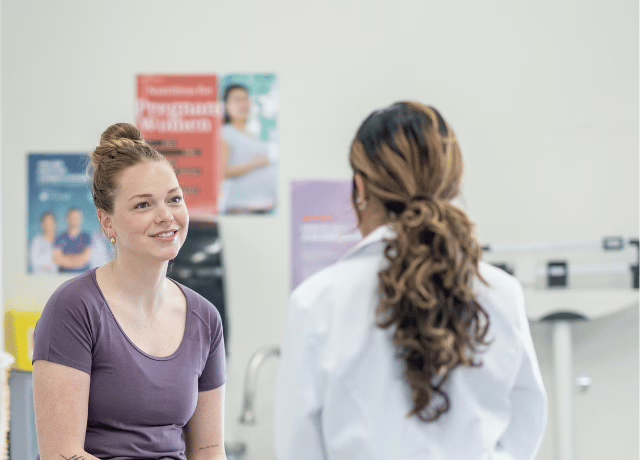

If you ask me, every month is Women’s Health Month! But in honor of the specifically sanctioned month, let’s take this opportunity to review the necessary health screenings all women need to prioritize for long-term health.
General Wellness Exams
Start with your annual wellness exam covering – vitals, breast exam, listen to heart and lungs, feel thyroid, look in throat, ears, muscle strength, joint tenderness. Order general wellness labs.

Know ahead of time if your insurance covers labs, otherwise we have options like Principal Lab, prepay for much more affordable out of pocket option.
Additional appointments to make on an annual basis:
- Optometrist for eye exam
- Dermatologist for a full body skin exam
- Audiologist for hearing check
Gynecological Exams
Pap/pelvic exam. Paps are no longer always recommended annually, frequency depends on if a past result test ever abnormal.
If it’s normal, then it will be due every five years. If abnormal, your provider will discuss with you the recommended frequency based on how many exams are abnormal and in what way.
Body Scans & Imaging
Mammogram
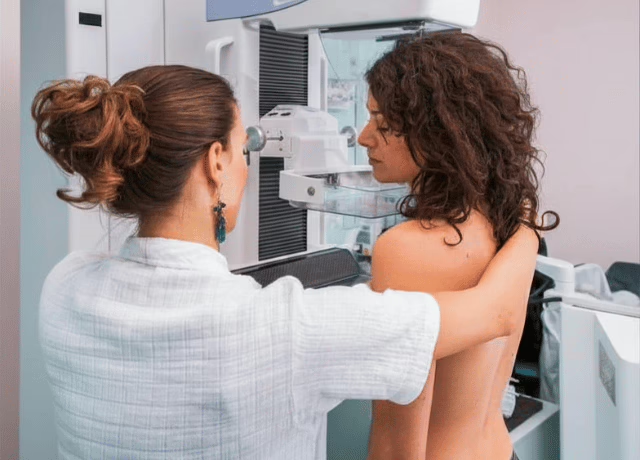
If you have crossed the 40 year old mark, then add a mammogram to your list of annual appointments. Mammograms find tiny microcalcifications in breast tissue, often BEFORE you can feel it. It’s best to start testing EARLIER than 40 if at high risk, or there is a family history risk.
Depending on your risk factors, some women may be safe to do every other year, but if you do annual screenings and something pops up, we are at a better stage to treat it when it’s early.
At that time, we’ll work with your oncologists to take it out. I am a big fan of finding things very early and taking care of it asap to avoid more invasive and life-altering
Breast Ultrasound
If you have DENSE breasts – let’s be clear, nearly ALL of the reports I see now say fibroglandular density, it is also good to ask for a breast ultrasound in addition to your annual mammogram to see through the dense tissue.
Thermography
Thermography is a type of imaging that detects cellular function changes and can be helpful in addition to a mammogram. The environment must be VERY controlled, temperature, coffee, exercise, etc – which is difficult to manage.
MRI
If your mammogram confirms dense breast tissue, which is hard to scan, and you have a history of breast cancer in your family, your doctor may recommend an MRI. This will provide a more comprehensive view of your body, including any other styles of cancer.
DEXA Scan or Bone Densitometry
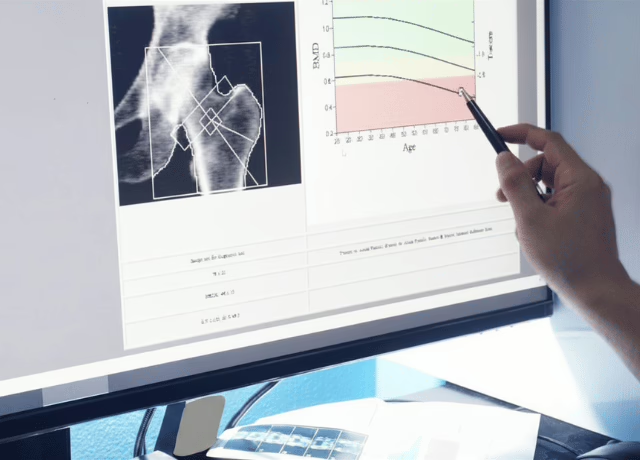
Bone densitometry is a screening tool for detecting the density of bones and determining if there is any bone loss.
While traditional medicine likes to recommend age 60 to start these scans, I prefer to do them earlier around age 50, since we can prevent bone loss and even build bone strength with hormone replacement therapy (HRT), nutrients, diet modifications, and resistance training.
(Note: Dr. Dalal currently has availability to order these tests. Contact our office to schedule.)
Hormone Testing
Last and most vital is hormone screening. Ideally you want to get screening first done around ages 30 to 33 before any perimenopause starts so that when things change, we have your baseline to start with!
If you are over 34 or starting to notice any of the following perimenopause symptoms, please contact our office today to get your testing ordered.
Symptoms of Perimenopause include:
- not feeling like yourself
- unmotivated, feeling Meh
- poor memory
- poor night vision
- hot flushes day or night
- exercise intolerance
- weight gain
- poor quality sleep
- vaginal dryness or discomfort

Again, Dr. Dalal can get you started, order testing, and all of us on the team can take great care of you!
While every woman’s body is different, the more informed you are about your own, the better you can make decisions for your long term health. Talk to your provider to decide the best course of testing and image that suits your health needs.